Community-led restoration campaign for the historic Grade II listed Woolton Baths.
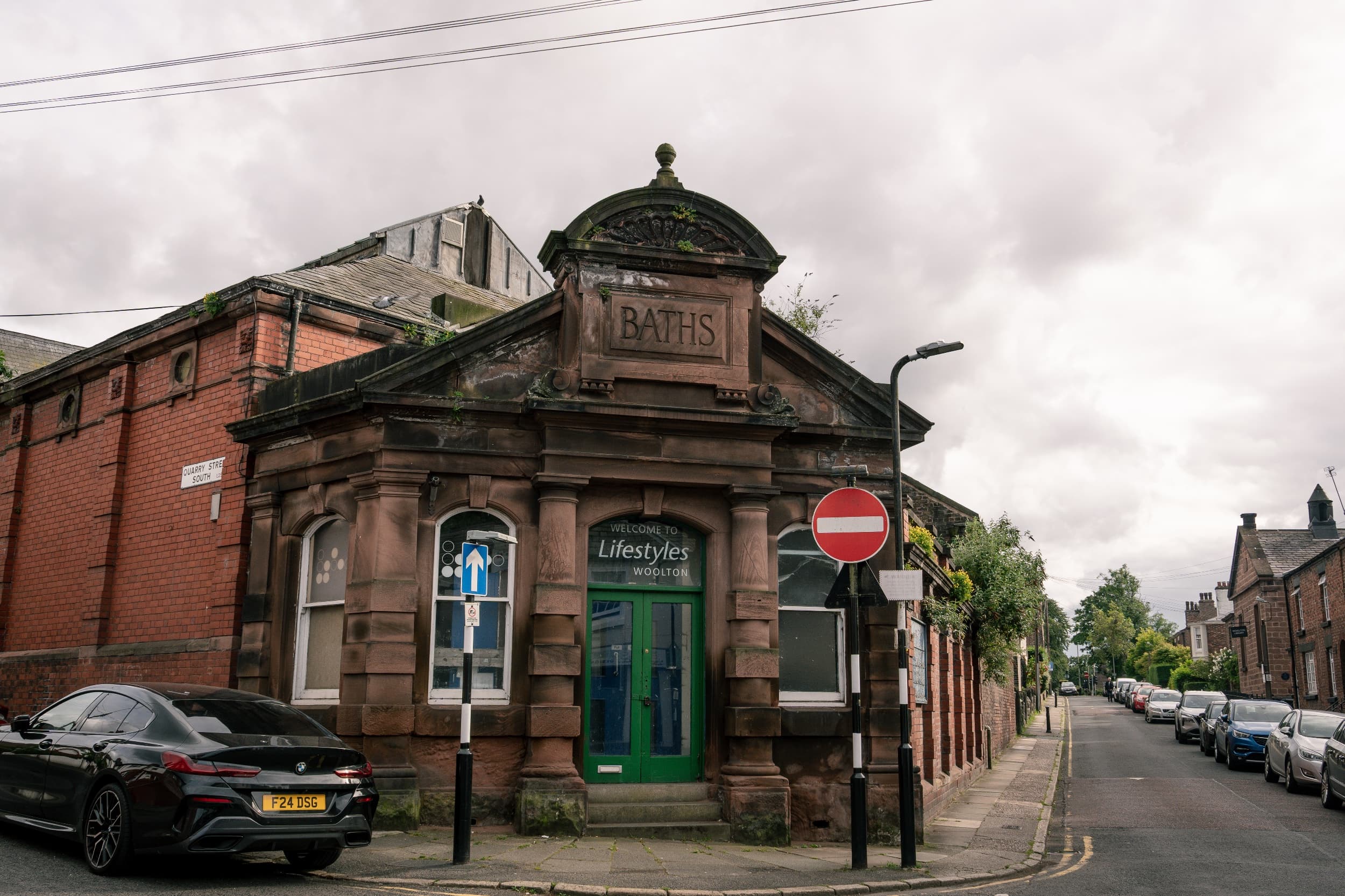
The historic exterior of Woolton Baths
1893 — Today

More Than130 Yearsof Woolton History.

Woolton Baths is more than an old swimming pool. It is a building created for ordinary people, a place where generations learned to swim, communities gathered and part of Liverpool's cultural and sporting history was written.

A Woolton Landmark

1893

The year Woolton Baths opened

Built for the community from the very beginning.

Woolton Baths was born from an act of civic generosity. Holbrook Gaskell wanted local people to have access to bathing and swimming facilities regardless of class or sex. That principle — creating something valuable and accessible for the whole community — sits at the heart of what we want Woolton Baths to become again.

The Story

From Victorian public baths to a Liverpool landmark.

Every generation has added another chapter to the story of this building.

The Beginning

1891

A gift to the people of Woolton

Local philanthropist Holbrook Gaskell JP offered to provide public baths for Woolton, on the condition that the local authority would maintain them. His vision was unusually progressive for its time: the baths were intended for both sexes and all classes, bringing bathing and sanitary facilities within reach of the local working population.
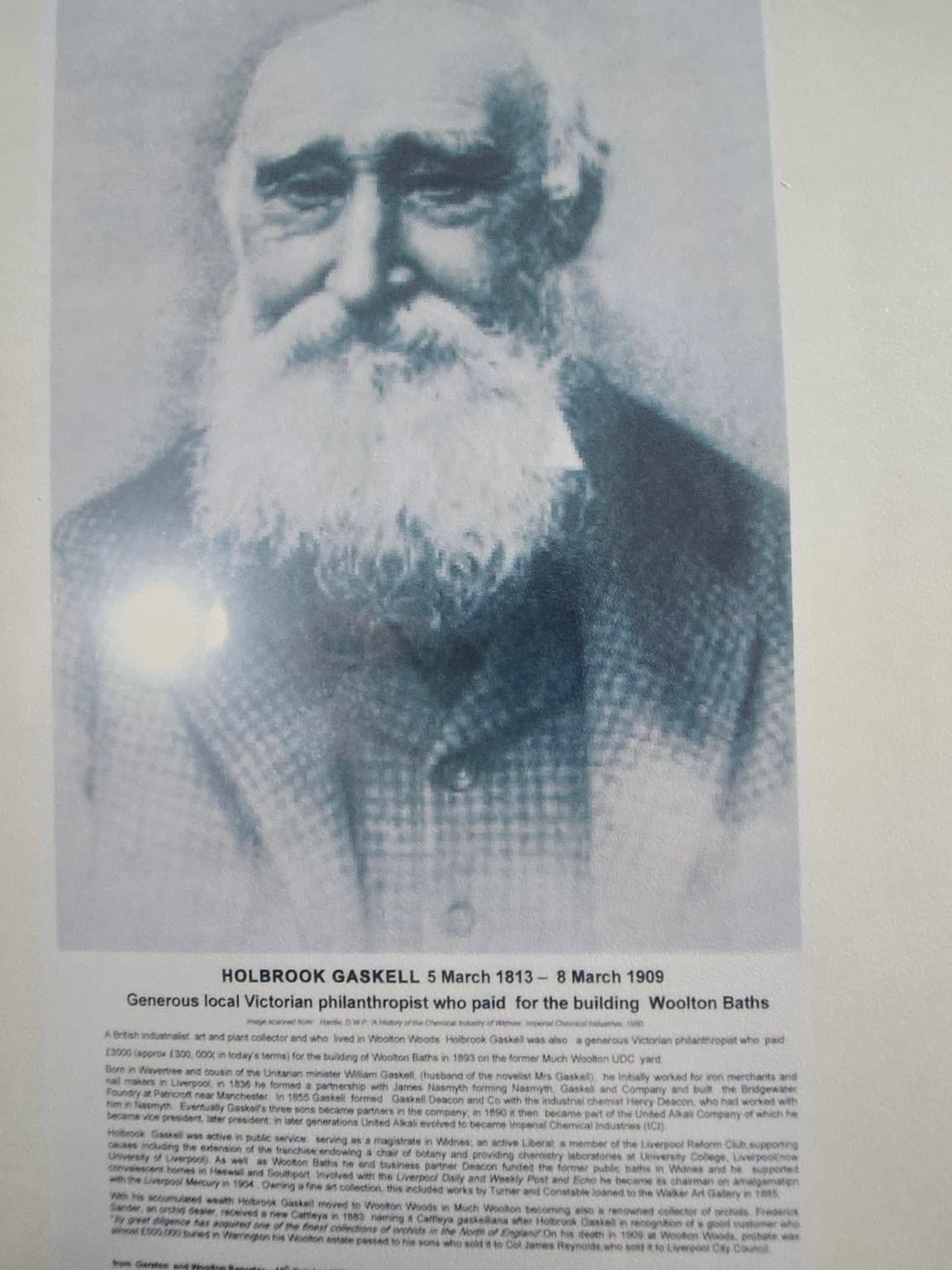
Historic portrait of Holbrook Gaskell
Holbrook Gaskell — 5 March 1813 – 8 March 1909

Designed & Built

1891–1893

Woolton Baths takes shape

The building was designed by Manchester architects Horton & Bridgford. Isaac Dilworth of Wavertree acted as contractor, while Bradford & Co of Manchester and Salford undertook the engineering work. Construction cost approximately £3,300 — a substantial investment in public health and community life.

Opening

June 1893

The doors open

Woolton Baths opened in June 1893. The original complex included six private baths, a footbath, plunge pool, swimming pool and laundry. The main swimming pool measured approximately 60 feet by 25 feet and would go on to serve generations of local families.

Community Sport

1893

Woolton Swimming Club

Woolton Swimming Club was established soon after the baths opened. Until the building's closure, it was one of the oldest swimming clubs still operating from its original home — creating a sporting tradition stretching across generations.

Growing Demand

1899

Winter opening begins

The baths had originally closed during the winter months. By 1899, demand for the facility saw Saturday winter opening introduced, beginning an important evolution in how the building served the wider community.

More Than A Pool

1910

The pool becomes a community space

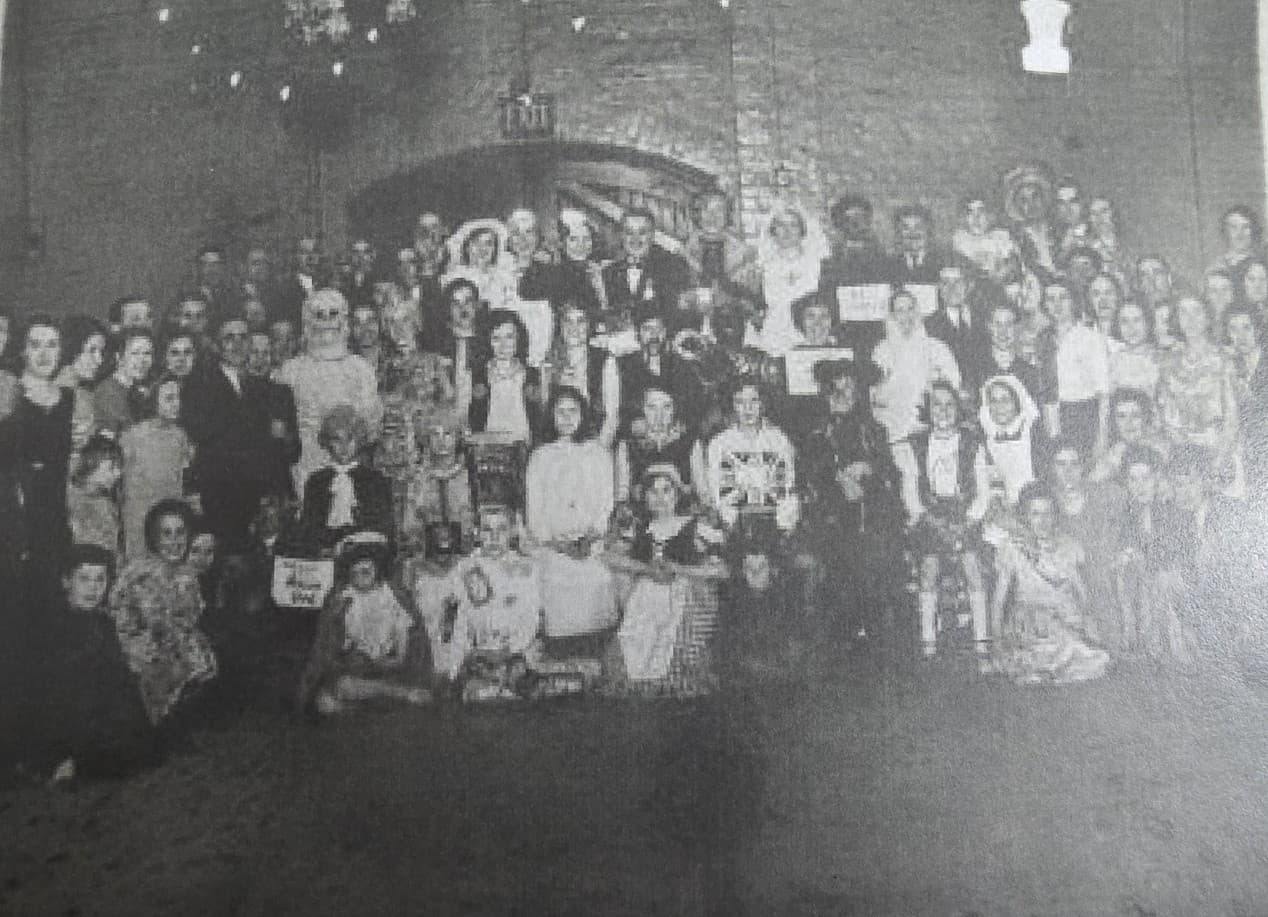
A decision was taken to floor over the swimming pool during winter so that the pool hall could host social and community activities. More than a century ago, Woolton Baths was already demonstrating that the building could serve Woolton both as a swimming facility and as a flexible community venue.

Historic gathering inside the Woolton Baths pool hall with the temporary winter floor in place
Winter pool hall temporary floor — from 1910

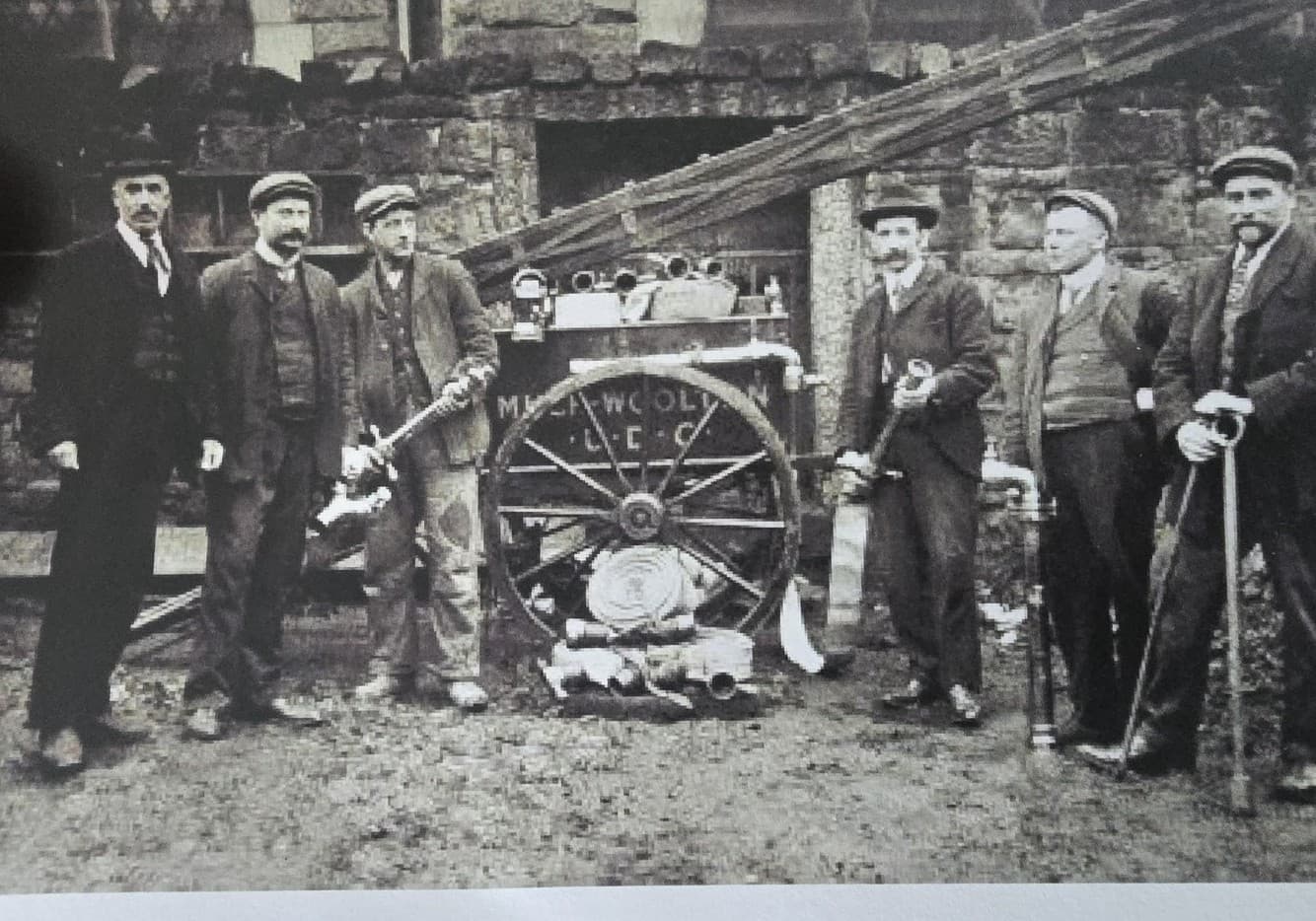
The Fire Service

Early 1900s

Firefighters based at the Baths stables

The stables at Woolton Baths were also used by Woolton's fire service. Historic photographs record local firefighters and their equipment at the site, showing that the building played a wider role in community life beyond bathing and swimming.

Historic photograph of Woolton firefighters and firefighting equipment at Woolton Baths
Woolton fire service at the Baths stables — early 1900s

Liverpool

1913

Woolton becomes part of the city

Following Woolton's incorporation into Liverpool, responsibility for Woolton Baths transferred from the local Woolton administration to Liverpool. The baths continued their role as an important public facility for the growing city.

Changing Times

20th Century

War, adaptation and survival

The baths closed during both World Wars but survived. In 1935 the original rounded ends of the swimming pool were squared off to better accommodate swimmers. The building continued to evolve while retaining much of its distinctive Victorian character.

1910 → Today

116

years apart. The same principle.

Our plan has historical precedent.

In 1910, the swimming pool was floored over during winter so Woolton Baths could host social and community activities. Today, our phased restoration proposes using the building in a remarkably similar way while the expensive swimming infrastructure is restored.

We are not inventing a new purpose for Woolton Baths. We are reviving one it has served for more than a century.

Liverpool Music History

Before the world knew their names, they were local lads at Woolton Baths.

John Lennon and Paul McCartney are both part of the story of Woolton Baths. Historic England records that John Lennon learned to swim here and identifies Sir Paul McCartney among the building's users.

Long before The Beatles changed popular music forever, this was one of the ordinary community places woven into their Liverpool childhoods.

John Lennon

Learned to swim at Woolton Baths.

Paul McCartney

Swam here as a young Liverpool boy.

A Family Story

The McCartney Brothers

The day Paul pulled his younger brother from the water.

In a 1965 magazine profile, Mike McCartney recalled getting out of his depth while swimming at Woolton Baths when he was still unable to swim properly. According to Mike's recollection, his older brother Paul pulled him from the water.

Mike remembered Paul treating the incident characteristically casually afterwards, joking that it had allowed him to practise his lifesaving lessons.

This story is presented as Mike McCartney's recollection, originally published in a 1965 profile of Paul McCartney.

Athens 2004

Bronze

200m Butterfly

From Woolton to the Olympics

Steve Parry learned to swim here.

After nearly drowning as a child, Liverpool-born Steve Parry was encouraged to learn to swim. He learned at Woolton Swimming Baths.

That young swimmer would eventually become a double Olympian and win a bronze medal for Great Britain in the 200 metre butterfly at the Athens Olympic Games in 2004.

A community pool can be where an extraordinary journey begins.

October 2010

After 117 years, the doors closed.

Woolton Baths closed to the public in October 2010. A building created to serve its community suddenly fell silent — but its story did not end there.

117

Years serving the community before closure

1893

The year the baths first opened

2010

The year the doors closed

Grade II Listed

Recognised as nationally important.

In 2012, Woolton Baths was granted Grade II listed status, formally recognising the architectural and historic importance of the building.

The designation protects much more than a façade. Significant surviving elements of the pool hall and wider building form part of its special historic character.

Baroque Revival sandstone entrance façade

Historic wrought-iron and timber roof structure

Historic pool tilework

Original ladder entrances and pool details

Cast-iron grab rails

Historic gallery overlooking the pool hall

The Next Chapter

History brought us here.Now we have to protect its future.

Our ambition is to secure Woolton Baths through a Long Term Lease, restore the building in achievable phases and ultimately return swimming to this historic pool while once again creating a place the wider community can use and enjoy.

The building has survived Victorian Liverpool, two World Wars, generations of swimmers and more than a decade of closure. We believe its next chapter should belong to the community.

Historical Sources

Historical information on this page has been compiled from sources including the Historic England National Heritage List entry for Woolton Baths, historical material published by The Woolton Society, Liverpool John Moores University's record of Olympic swimmer Steve Parry, contemporary published recollections of the McCartney family, and archival photographs supplied to the Save Woolton Baths campaign.

Where personal memories are included, they are presented as the recollections of the people concerned rather than as independently verified events.

This means no campaign donations or community fundraising money are being spent on building or hosting this website. Every pound raised can go towards helping restore Woolton Baths.

Save Woolton Baths

Save Woolton Baths

Woolton · Liverpool

Bringing Woolton Baths back to life.

A community-led campaign working to secure Woolton Baths and restore it for future generations.

Future Of Woolton CIO — In Formation

futureofwoolton.org.uk

Charitable Incorporated Organisation registration pending.

Community First

We believe Woolton Baths belongs at the heart of the community. Every volunteer, sponsor, supplier and supporter helps move this historic building one step closer to reopening.

Follow the campaign

Follow Save Woolton Baths for campaign news, restoration updates and partnership announcements.

© 2026 Save Woolton Baths Campaign.